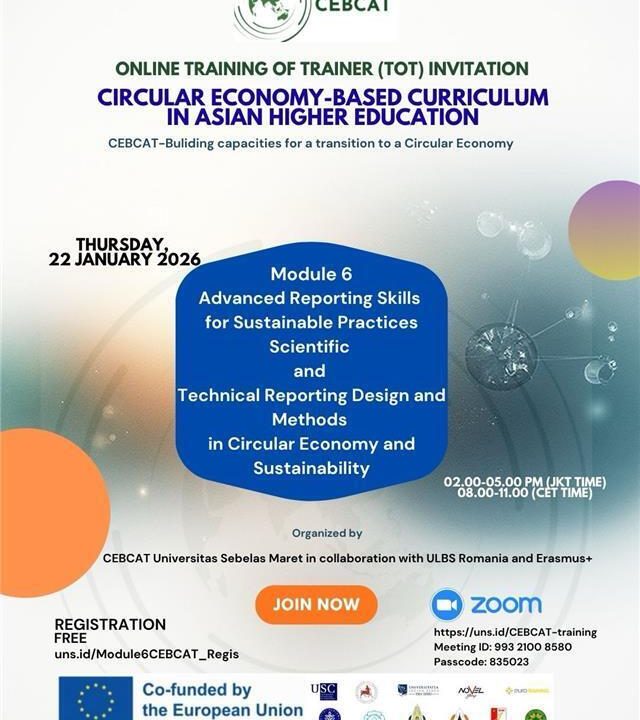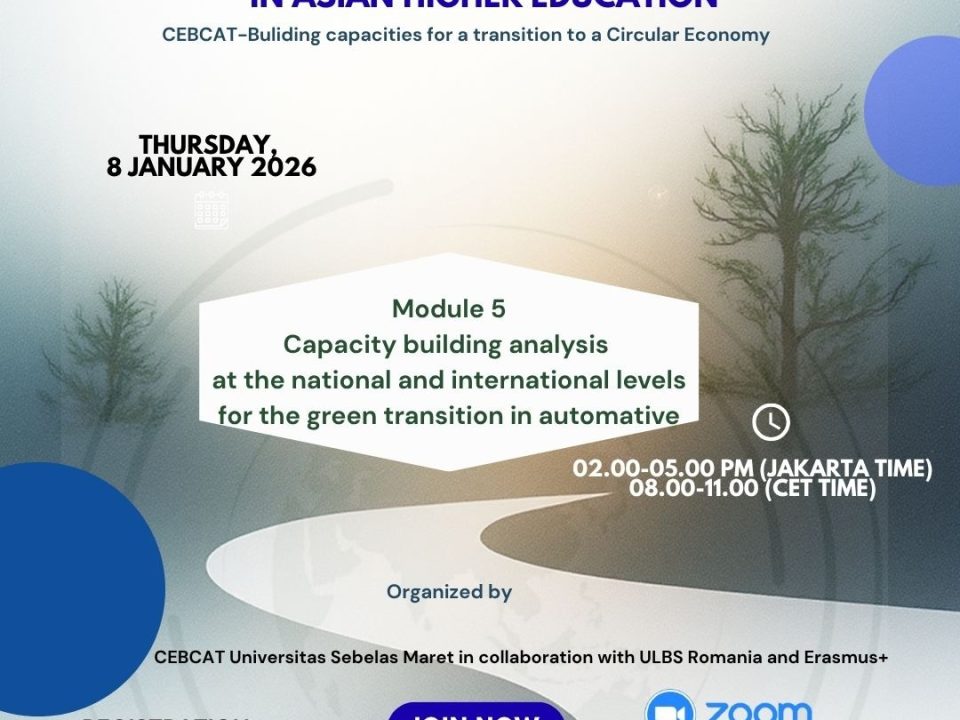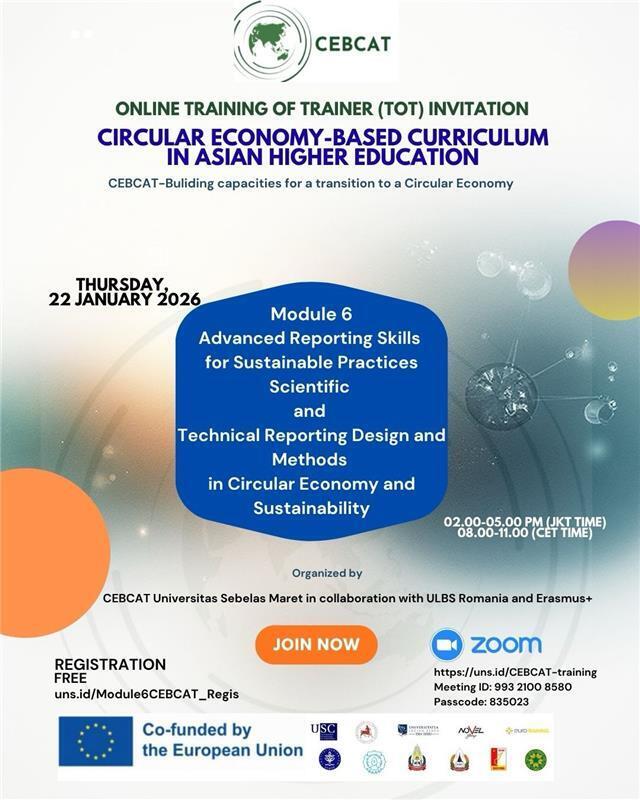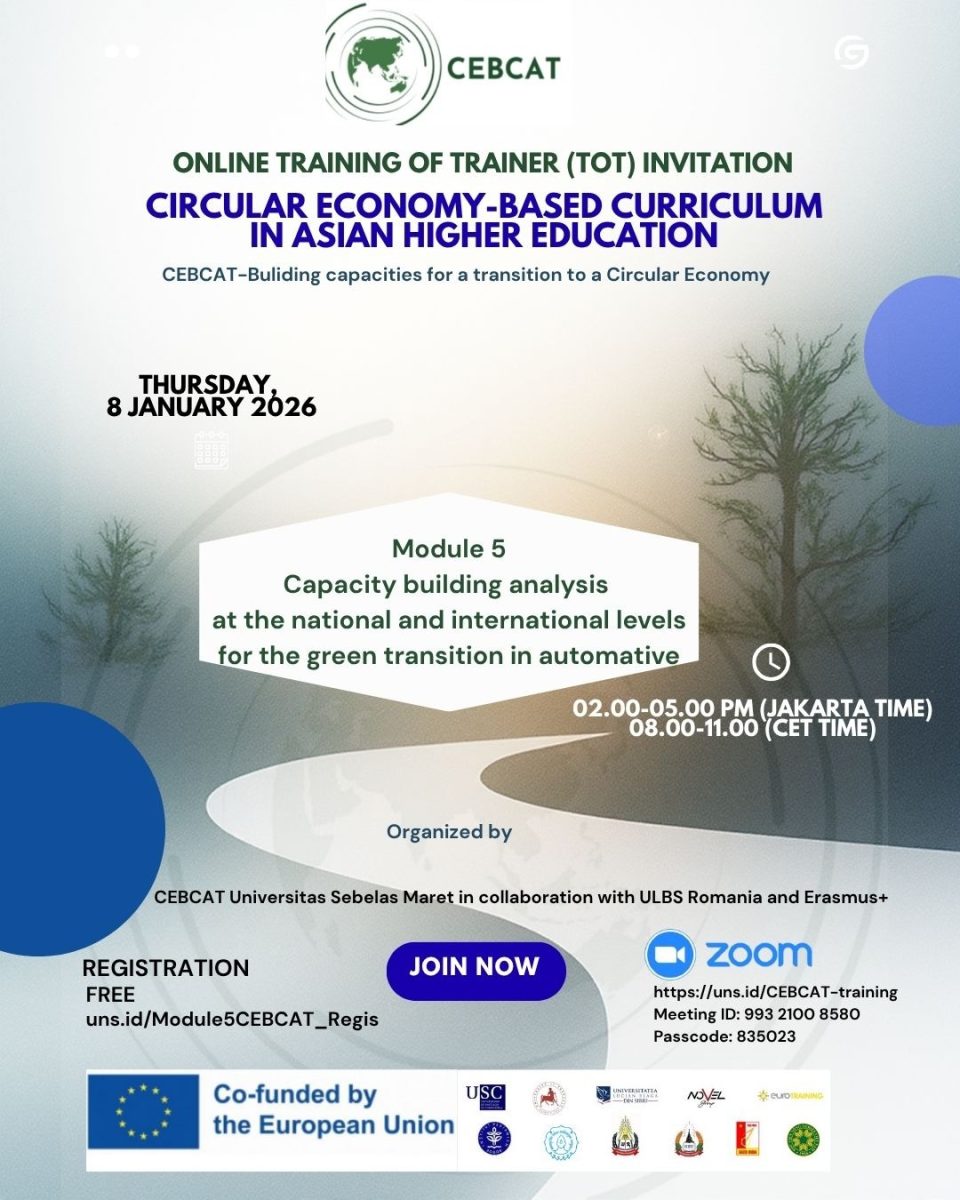
Online training of trainer (TOT) invitation
January 8, 2026
CEBCAT TRAINING MODULE 6
January 21, 2026
The transition from a linear to a circular economy (CE) is a pressing imperative for Southeast Asia, a region facing rapid industrialization and environmental risks. This study, part of the CEBCAT project, examines the current state of higher education in Indonesia, Laos, and Vietnam with respect to CE and sustainability. The purpose was to identify existing knowledge and ability gaps and instructional problems, thereby informing the development of a master's curriculum in CE and sustainability. Using a mixed-methods approach across six partner universities in Asia, data were collected from 103 individuals, including students, academic staff, and industry professionals. The findings reveal that, although there is a foundational awareness of sustainability, a deep conceptual understanding of the circular economy is limited. Critical skill gaps were identified in practical application, environmental impact assessment, and digital literacy, and a strong preference for experiential learning over purely theoretical or online instruction. However, the study highlights significant institutional barriers, including limited funding, outdated resources, and heavy faculty workloads. Effective CE capacity building requires a shift toward interdisciplinary, practice-based curricula supported by robust industry partnerships and institutional investment.
LINK https://www.syncsci.com/journal/AMLER/article/view/AMLER.2026.01.006
DOWNLOAD HERE